Tuesday, August 13, 2024

You Are Real (& You Matter)

Yes, you read that right: You are real.

This might be no surprise to you, but it's a reminder I think we all need to hear (and a declaration I have to make myself sometimes) because there is a pervasive tendency in digital culture to allow the anonymity that the barrier of the screen creates to divide us, leading us to say and do things we would never have the gall to say to somebody in person.


Image of a digital-looking avatar in a virtual world peering through and connecting with a human on the other side of the screen.
Although I'm a huge fan of digital media and heavily invested in online learning, I also know full well that behind every screen name, avatar, or default profile image is a real person who matters not only to me but to God...as well as to others around them. Now, I make it a special point to only "friend" people who I know and have interacted with somehow in some part of my life (along with about half a dozen virtual friends that I still want to connect with in person someday, but whom I know super-well digitally).

So, that's why I say "you are real."  If you're seeing this, we've met somewhere, somehow, and I know you. You're not just some random user in a forum who saw my post and wanted to rant; you're somebody I know somehow. And you matter.

Awhile back, I had an online debate with a fellow minister about the ethics and ramifications of "virtual church" (ironically, this was before COVID-19 lockdowns), and he was absolutely convinced that it was impossible to connect with people digitally in a meaningful way.  He simply couldn't make the leap to how online contexts are so often a reflection of the reality we often experience in person. Of course, with me having taught and studied online (as well as in person and hybrid), and my having spent the last 10+ years (now 15) developing quality online learning experiences, and with me being an early adopter of livestream and videoconferencing technologies, he was picking a fight with the wrong guy (it's kind of a losing proposition to insist something can't be done when you're arguing with somebody who's been doing it for over a decade).

And, ironically, we were having this whole discussion on Facebook, via screen names, with avatars and selected media samples to represent ourselves. So it was hard not to chuckle at the notion that either I was an AI "bot" or he was simply proving my point with every attempt to argue otherwise (if I'm not a real person, why does it matter what I think?). Upon later reflection, I realized he was letting that screen barrier and the anonymity it creates get in the way of a potential friendship, especially considering everything else we had in common. Sometimes we care more about wanting to be right than about our relationship with the person on the other end.

Remember...

  1. We are not as different nor as divided as the media want to make us think we are. Such outlets thrive on portended divisiveness because it sells airtime and goods.  Don't believe it.
  2. Most of us have significantly more in common with those we argue with than the few things we disagree on.  Focus on what you have in common and your shared concerns, and you will be amazed at how much more productive, meaningful, and transformative your interactions are.
  3. All of us are facing challenges and struggles and situations that seem unprecedented in our experience.  When I finished a huge regional conference with international attendees, followed by multiple meetings since then and today via Zoom with many different groups of people I know, work with, and interact with, I was reminded of this once again.

And knowing this forces me to think long and hard about how I respond to others online, because...not only are YOU real, but so am I. And so are "THEY" (and in reality, there is no "they," only "WE" - if we can allow ourselves to be part of a global community of progress).  When everything's "they" and "them," and there's no "we," then we've lost the most precious human capacity and privilege we have - COMMUNITY.

So, greet somebody today, tomorrow, and the next day as if they're real...because they are.  A fellow citizen and traveler through life's journey with challenges and struggles much like you and I face...trying to make sense of it all and make a difference.

And see if that doesn't change your perspective a bit (as well as how they respond to you).

- - - 
SOURCE: Image generated by DALL-E 3 (ChatGPT4o) in collaboration with David J. Swisher.  Text r
epublished from an original Facebook post I made Aug. 13, 2020 (updated slightly).


Saturday, January 15, 2022

When the Medium Shapes the Message

Whatever technological medium is used to convey a message inevitably becomes part of that message, sends a message, and shapes that message.

I want to believe (and still try to insist) that technology is morally neutral, and that it's what we do with it that allows it to be used for good or evil.  But at the same time, I realize that embedded within that is a subtle reality that the moment we encode any form of communication into a specific medium, that medium inevitably shapes the message.  For example, how many of us have met plenty of people who are absolutely convinced that the Bible is - and has always been - in printed form, in 1600's Shakespearean English, and who can't conceive of the possibility that there was a time when the Word of God was a voice, etched in stone, then a living Person, later encapsulated into a set of scrolls, and now today in bound print form.  Many parishioners today also struggle to understand how the Word might be online or in a smartphone app with hypertext and multiple translations.  The words are familiar, but the form has changed, and so it makes many churchgoers uneasy.  In my line of work with educational hypermedia and digital church contexts, I enjoy seeing the Word of God transmediated into video form or immersive media, but I have seen plenty of pushback from ardent followers who can’t stand the possibility that online and digital forms could be every bit the Word of God as a bound, printed Bible in 400-year-old English.   
 
Don't believe me?  Try removing the Word from the context of a Bible in print form in the typical Midwestern Protestant church in the U.S. and see what happens!  Check out how differently a live discourse by Jesus might come across to a first-century audience on a hillside than it does to us today as written text in a printed, bound book.  Try suggesting (or reading from) a newer translation of those words into the colloquial expressions of today's English and watch the sparks fly!  Or try re-rendering the Bible in its original form (letter, scroll, etc.)... 
 
One time awhile back a church I was pastoring was doing a terrible job at living out the teachings of the New Testament (it wasn't for lack of biblical knowledge, though, as they had one of the highest participation rates I've ever seen for adult Sunday School and evening Bible studies; they just weren't "getting" it and living it; they were good at telling others how to live, but didn't do well at aligning their own lives to it).  So I took a couple of chapters from one of the N.T. letters (James 2 & 3) about favoritism, quarrels & disputes, prejudice, and the need to put others' needs above our own (the stuff we were having a problem with) from a modern colloquial translation, printed them off onto regular paper in a handwriting font, crumpled it up and re-smoothed it a few times to make it look well-read, and folded it up into an airmail envelope...and then I introduced it by saying, "Friends, we've received a letter from one of our missionaries who's been serving faithfully overseas but has heard of some of our challenges, and he took the time to write us and share some advice about how to live out the teachings of Christ amidst the struggles we're facing."  And then I pulled out the crumpled "letter" and read it. 

You could have heard a pin drop.  It was poignant, personal, and convicting...one of the hardest-hitting messages I've "preached."  The missionary obviously knew our situations and people and saw through our pretenses and went straight to the heart of the matter.  A couple of our dearest and most mature saints smiled when they realized what I was doing, but most were in deep thought, perplexed, sullen, or even angry.  Some were furious afterwards, and a couple of them challenged me on it and said, "How dare you read anything from the pulpit other than the Word of God," and one even threatened to call my District Superintendent and report me for this "heresy"!   

So that night I explained that what I had read WAS the Word of God, the missionary was none other than the biblical James, and you've got that "letter" in your Bible (and I had them turn there to see it for themselves and pulled out my crumpled letter and read parts of it to compare).  The problem, I explained, is that we've gotten so comfortable with the printed text form of our Bible that we're not hearing it like it was originally written...to a church just like ours, from a missionary (just like those we support), about real issues and challenges we're facing in the life of the church and in living out Christ's teachings.  The way I read that was exactly how James sent it; it wasn’t until many centuries later that his encyclical was gathered and bound with other Scripture into a printed volume.  Hearing it that way, it became very real to you, didn't it? 

I remember my Greek professor, Gordon Dutile, telling stories about reactions he had received from church folks when he read Scripture.  He was fluent enough in the original languages of the New Testament that he didn't preach from a modern translation but would instead read directly from his Greek New Testament, translating as he read.  He shared stories, though, of many times when parishioners asked him what translation he was reading from or challenged him, claiming that what he read couldn't have been the Word of God because it wasn't in the familiar translation they grew up with.  Once someone even questioned its validity because it had a burgundy hard leatherette binding instead of black leather.

It reminds me of this parody video I enjoy which re-creates what it might have been like to introduce bound print volumes to Medieval-era monks who were used to papyrus scrolls:

As hilarious and implausible as that might seem, having spent two decades implementing new technologies in educational and ministry contexts, I can relate quite well; I have had many conversations with people that went much like that!

And a big part of the problem is that we presume that new forms of media must follow the same norms and conventions as the familiar ones we have grown accustomed to, which inevitably limits our ability to embrace the features that make the new media format an improvement.  And in so doing, often we struggle to make the conceptual leap behind how it's an "improvement" because we have only seen and appreciated the former medium.

Maybe we need to stop dissecting the Bible as set of propositional truths for teaching (and for telling other people how to live) and instead read it the way it was originally delivered, as the Word of God to us on how we're supposed to live as a body of Christ...in the form and language that best communicates with our heart?!! 

Monday, March 16, 2020

Strange Days of Great Hope & Opportunity

This is not the first time the Church has had to meet in homes during a crisis.

Illustration of a coronavirus (SARS-CoV-2) created by the Centers for Disease Control and Prevention (CDC).  As a work of the U.S. federal government, the image is in the public domain.
It happened in Moses' day, Elijah's day, and Jesus' day. It happened during the early Church period as well as in the Dark Ages.  It happened during the time of Patrick, the days of Martin Luther, during the time of the Wesley brothers, and during the time of air raids, war, and Holocaust. This is neither new nor something to fear.

We've endured persecution and plagues, several dozen times throughout our history at least: Times when we weren't welcome to meet in larger facilities and times when even being seen meeting with other Christians meant immediate arrest and likely death. And in all those times, the Church has thrived...and grown...exponentially.

In fact, much of what we refer to as the "New Testament" was written as circular letters to groups of Christians meeting in homes who couldn't gather in public places, and about three-fourths of those letters were written by someone who was locked up or under house arrest or even living in exile. Some of the earliest church multipliers in Jesus' day were people delivered from "incurable diseases" and demonic affliction, and rather than welcome them in His entourage (giving them "stage time"), Jesus encouraged them to stay put and instead be a living witness to a life transformed in their immediate family and community.

At its core, we are an ἐκκλησία "ekklesia" (the called out ones). Not the "people who meet in a building," but the people who live and love differently...the people who face adversity with courage and still have enough love to share with others in need. The people willing to speak truth with conviction, whether or not it suits our own best interests, a people who know the difference between what we have a "right" to do and what IS right to do.

We've been a movement since Day 1, and we are at our best when we are creative innovators who find new ways to BE the Church in our culture no matter the challenges. Our confinement to fancy buildings dedicated for church use is a relatively recent invention (and a rather inefficient one at that given the larger) scope of how life change happens).

What an awesome opportunity for the Church #MadeNew to arise!

Monday, January 15, 2018

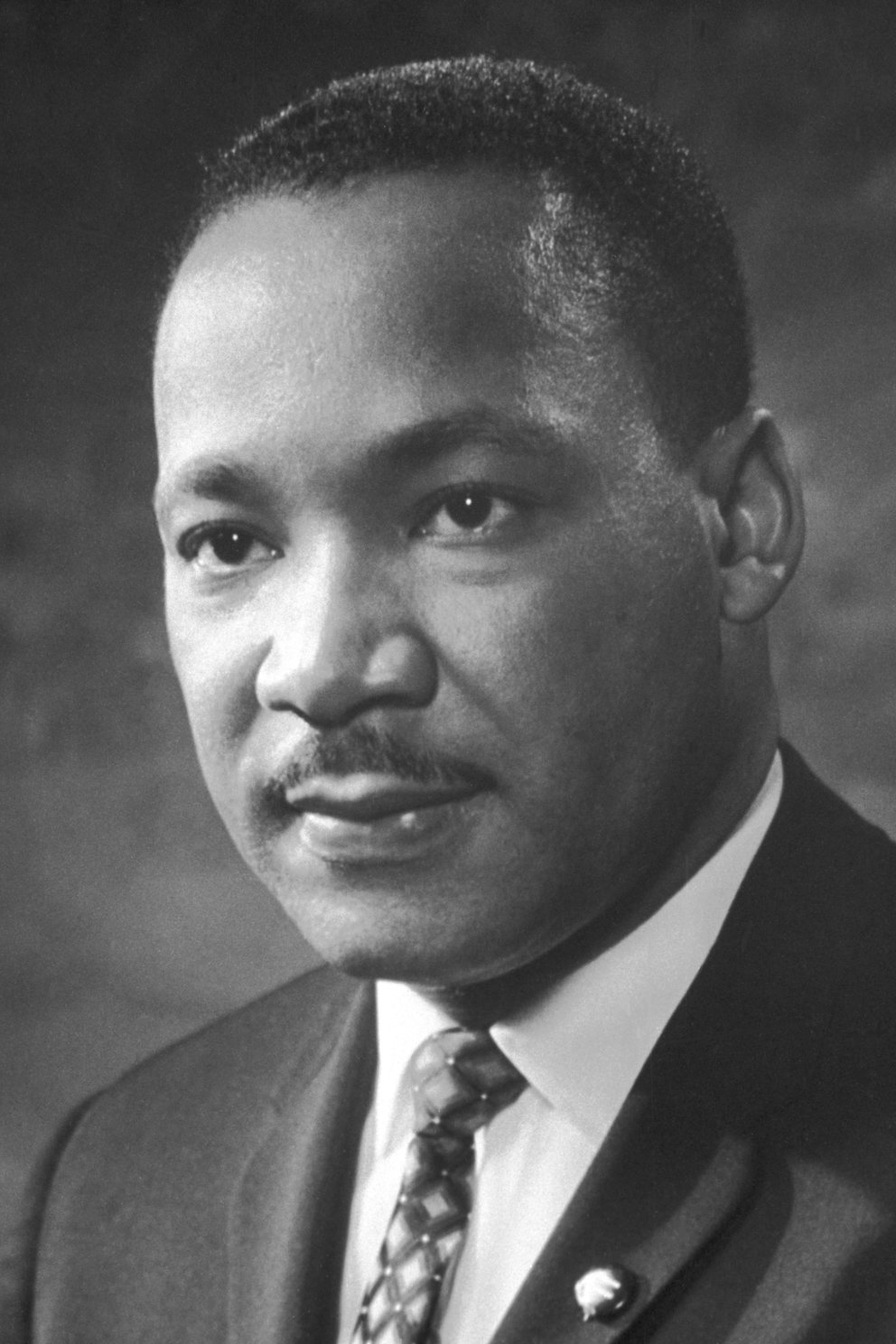
Celebrating Martin Luther King, Jr.? Or Myopic Nostalgia?


Millions of Americans will celebrate the legacy and accomplishments of Martin Luther King, Jr. today, oblivious to the well-documented fact that MLK's Christian faith was the very foundation, substance, and rationale behind all of the reforms for which he advocated.  An ordained Baptist minister, King founded the Southern Christian Leadership Conference as a tangible application of the teachings and principles of the Bible, and he organized multiple marches based entirely on the principles of non-violent resistance which were derived straight from Jesus' Sermon on the Mount (inspired by Gandhi's example, who also derived his understanding from the Sermon on the Mount).  King's legendary "I Have a Dream Speech," indisputably ranked as one of the greatest speeches of all time (by nearly every speech and rhetoric group there is) is laden with Biblical imagery, metaphors, and concepts, and its principles and applications cannot be rightly understood nor accomplished apart from Christian faith.  King is undoubtedly an example of Christianity lived right and it is good that that we celebrate.

Sadly, he will be referred to tens of thousands of times today as a "civil rights leader" and praised for his civil rights reforms, but seldom will he be called a "pastor" or "ministry leader," even though this was his primary identity while he was alive and how he was most often introduced.  Rarely will those who laud his accomplishments acknowledge the source of his reforms was his Christian faith nor that the inspiration for his efforts was the work of Jesus in his life.  This is cultural appropriation at its most perverse: Celebrating the outcome while repudiating the means, claiming the results while distancing oneself from the motives, iconizing the messenger while categorically denying the man behind the image, and categorically reducing the sum total of a ministry leader's tangible application of Jesus' teachings to a mere accolade of "civil rights reform."

Ironically, thousands of those who detest Christianity and who most vehemently protest Christians' insistence that it is impossible to separate one's beliefs from behavior in public and the marketplace and that Christianity is only rightly expressed when it is lived out as Jesus taught will simultaneously champion King's legacy today while categorically rejecting the efforts of dozens of other well-known "activists" who have stood up to heavy-handed societal and governmental injustices and chose instead to live and act according to the teachings of the Bible, even when it's unpopular or has been made illegal to do so.  Have we forgotten that King was beaten, jailed, criticized, condemned, and ostracized for his actions?  

Indeed, many who praise King today would have vilified him in his day. Right now there are dozens (actually hundreds) of Christian leaders who at this very moment are facing lawsuits, unjust fines, repossessions of their property and shutdowns of their businesses simply for choosing to live out the teachings of their faith in practical, tangible ways where they live and work, amidst a society that would rather Christians keep their faith private.  One day their efforts, too, may be championed as "civil rights reform" and their beliefs and behaviors validated, but right now it's a living hell of fighting an unjust system which seeks to silence all dissenters rather than embody the civil discourse and mutual respect which enables a civilization to thrive.  And sadly, many of their worst critics are those who claim to share their faith but think it's preferable to keep such matters private.  I, for one, am grateful that King chose not to keep his faith to himself!

Yes, let's give the man his due today.  Martin Luther King, Jr's life and legacy deserve to be celebrated.  But please don't stop there, or you'll simply be doing him and his legacy lip service, invalidating his efforts by disassociating the reason for his reforms from the outcomes he achieved.  Instead, work to end the tyranny of persecution no matter the source (even when it's us) and no matter the recipients (even when it's somebody we don't like or can't stand).  And don't even pretend that King's work is finished or try to rest until "the sons of former slaves and the sons of former slave owners will be able to sit down together at the table of brotherhood."  Until the day comes when King's descendants "will not be judged by the color of their skin but by the content of their character," King's dream has not yet been realized.

King's speech (transcript, audio, & pics) can be viewed on American Rhetoric's "Top 100 Speeches," where it is #1: http://www.americanrhetoric.com/speeches/mlkihaveadream.htm

Thursday, October 20, 2016

Obsessed With the Wrong Kingdom?

Sage wisdom from Jeff Piepho, pastor of Revolution Church (Salina, KS)...

If you've ever had trouble sleeping because "that person" might get elected, but you've never had a sleepless night praying for someone to be saved...
          ...you might be obsessed with the wrong Kingdom.

If your blood boils when you hear candidates lie, but your blood never boiled because of your own sin...
          ...you might be obsessed with the wrong Kingdom.

If you've said "Trump" or "Hillary" or "Gary" or even "Jill" more than "Jesus" lately...
          ...you might be obsessed with the wrong Kingdom.

If you have said that "Christians have a duty to vote!"...
          ...you might be obsessed with the wrong Kingdom.

If you spend more time trying to convince people to vote a certain way than you do trying to share the gospel and save them from the fires of eternal hell...
          ...you might be obsessed with the wrong Kingdom.

If you find it more embarrassing to pray for someone, than to share your political ideology...
          ...you might be obsessed with the wrong Kingdom.

If you spend over an hour watching a Presidential debate, but "don't have time" to do serious Bible reading and prayer...
          ...you might be obsessed with the wrong Kingdom.

If you are more fired up by/annoyed by/excited by political discussions than you are by sermons...
          ...you might be obsessed with the wrong Kingdom.

"Let us run with perseverance the race marked out for us,
fixing our eyes on Jesus, the pioneer and perfecter of faith.
For the joy set before him he endured the cross, scorning its shame,
and sat down at the right hand of the throne of God.  Consider him
who endured such opposition from sinners, so that you will not
grow weary and lose heart."      ~ Hebrews 12:1-3 (NIV)


Written by guest blogger Jeff Piepho, pastor of Revolution Church (a contemporary Brethren in Christ congregation in Salina, KS).  A graduate of Biola University, Jeff obtained a Masters degree in Christian Apologetics.  He is politically informed and involved, but knows how to keep his priorities straight.  Jeff hosts a popular weekly radio show called Truth Revolution, which is where “faith and reason meet” as each week he and associate pastor Dave Waggoner tackle science, mathematics, archeology, and logic, integrating them into faith, Biblical studies, and religion. Truth Revolution can be heard on thirteen radio channels and podcasts, as well as broadcasts on YouTube: Truth Revolution Live!

Copyright © 2016 Jeff Piepho (used by permission).

Wednesday, July 20, 2016

The "Pokémon Go" Phenomenon: Friend, Not Foe

I was one of those ministers in the early 90s who was adamantly opposed to Pokémon and I strongly felt that no Christian should engage in it, and further, that parents (& churches) should protect their kids from it. I had just come out of Bible college, was in some of my first youth ministry assignments, and although Pokémon was all the rage then, I did my research and concluded that it was a doorway to alternative (Eastern) spirituality. In hindsight looking back, it's hard to believe that trading cards could lead people into demonic possession, but we had some pretty convincing information back then (albeit a bit overhyped and exaggerated), and when I saw a few episodes of the cartoon show later, my worst fears were realized because they DID portray some clearly Eastern religious themes which contradicted Christianity. However, as a student of semiotics & future studies (a Biblically-informed trendwatcher) with many geek friends these days, I've been really watching this Pokémon Go phenomenon from its earliest announcement, and to be honest, I prepared for the worst. Instead, I've found that it's not at all what I imagined (or feared). I have been playing it with my 14-year old son as a way to not only engage with him but also find out why it's so popular and determine whether there's any concern. As an active player, I HAVE YET TO FIND A SINGLE SPIRITUAL CONCERN. We're now 9th level (of some 20+), already have a few "rares" (higher level characters), and have played around with "evolving" a few characters into more powerful ones, and I simply cannot find a single thing in the entire game/app to criticize or condemn, and nothing which suggests an agenda of alternative spirituality. If Niantic (the American company which developed the app in coordination with Nintendo and The Pokémon Company) had ulterior motives in releasing it, I certainly can't find evidence of that. On the contrary, it's just fun! It IS quite addicting because you want to collect them all, and like all games and activities, it does raise time management issues. I've also read some accounts of people doing stupid things while playing the game (driving, walking off a cliff, mobs chasing a rare appearance, etc.). But the game itself isn't the problem here; it's people not using common sense, failing to balance work & leisure, and/or doing stupid things because they've allowed themselves to get caught up in something without proper boundaries. People do that in all sorts of areas of life, and much of our ministry deals with the fallout from that kind of stuff. Beyond that, however, I see lots of positives. It has forced millions of kids and young adults (& even middle-aged adults) to get out from in front of the TV, Netflix, Xbox, and computer and WALK (we have, too), and since most of the PokéStops and gyms are churches, community buildings, and civic interest features, it is quite informational. I have walked alot in this game and found all kinds of neat historic markers and information about my town's heritage, things I never would have discovered if I hadn't been trying to chase down an elusive virtual Pokémon character who was missing from my Pokédex (collection). It's positively transformative on a community, too. I used to avoid my town's downtown square at night because of the several bars which surround its perimeter, but now it's a happening place overrun by Pokémon Go players! (the last few nights, I've counted well over 50 players of all ages, including entire families and groups of teens playing together). I've met and talked with more people on the square and in local parks this last week while playing the game than I have met in the last 2 months combined! We're total strangers, but we immediately have something in common to talk about. I can understand the hesitation to embrace the unfamiliar (especially if you grew up in the 80s or early 90s and know its checkered past). But past misperceptions don't equate to present realities, so I encourage you to look beyond those. I can't help but think that God can use this for Kingdom potential and that a wise ministry leader would look for opportunities to engage! (the pic here is what our downtown courthouse square & vicinity look like within the game)

Thursday, January 1, 2015

Bored Naysayers

The arrival of 2015 brought with it a deluge of articles from a variety of  news outlets, all acknowledging that Back to the Future II was set in 2015 and then critiquing all of the things which didn’t come to pass as imagined.  Unfortunately, most of these articles are are misguided in their facts - about both the movie and technology - and are overly critical.  So as a die-hard Back to the Future fan who graduated that magical year (1989), allow me to counter their shortsightedness.

First, it’s not Oct. 21st (the date in the “future” when Marty McFly arrived), so these articles' criticisms are 9 months premature.  With technology innovation, that timeframe is like eons.

Second, we DO already have many of these technologies:
  • Video calling (through Skype, FaceTime, and a variety of cloud-based webconferencing systems) are fairly common now, as well as card-based financial access like Marty used in his call from Needles.
  • No, we don’t have flying cars in common usage…yet, and no, our cars don’t all have angled designs modeled after a Lamborghini on steroids.  That looked cool and “futuristic” in 1989 but it turns out it’s not that aerodynamic.  However, flying cars do exist: Check out the AeroMobile and the Terrafugia Transition.  It may be a few years before they’re practical and their usage is widespread, but B2TF wasn’t too far off.
  • No, we can’t hydrate a pizza in 30 seconds…yet, and such machines aren’t in common circulation.  But all of the technology involved already exists; we can dehydrate and rehydrate food efficiently both on planet Earth and with lightweight space food for astronauts. It just isn’t that practical or lucrative of an idea. 

There are also many more of B2TF’s technologies which currently exist or are in beta stages, just not in widespread usage yet:
  • A prototype of self-tying power shoes has been developed and its inventor is actively trying to get them to market: http://youtu.be/k_Efr2TaEPo
  • Hoverboards do exist…sort of.  Two models have been proposed and working prototypes of them are in circulation (one is even trying to release them by the Oct. 21st date).  I’m not impressed with either; their inventors struggled with some very obvious practicality issues and I don’t think either of the current solutions reflect B2TF’s design intent at all, but I am certain my kids will get to enjoy something very similar to Marty’s hoverboard within my lifetime.
  • Robots filling your car up at a fuel station may be non-existent, but we have robots in active use now for nearly all repetitive tasks, from vaccuming your floor to milking a cow to machining a car or laptop.  And let’s not forget the electric cars with inductive charging stations like the Tesla which make B2TF’s depiction seem archaic compared to what we have now.  It’s not that we can’t, it’s that in general the public is simply not ready for trusting their car fueling to a machine…yet (but we’re getting closer to it since we have no problem paying at the pump with automated systems).
  • We also don’t quite have an indoor garden center fruit dispenser.  But with all of the advances in hydroponics as well as the 4x4 gardening movement, it’s only a matter of time before something along these lines becomes a practical reality.

The two things they didn’t get “right” were Jaws 19 and the Cubs winning the World Series.  But keep in mind, these supposed “predictions” were satire anyway: Nobody wants to see 16 more editions of that movie; we’ve long since moved on to piranhas, anacondas, and vampires.  And the Cubs winning a World Series?  Well, as this article suggests, don’t give up just yet; what seemed impossible in 1989 isn’t out of the realm of possibility.

So what on earth does this have to do with church communication?  Church folk are notorious for being bored naysayers, criticizing every new idea, approach, and innovation.  And most of the time, we don’t have our facts straight nor even take the time to understand what’s really being proposed before we shoot it down.  In so doing, we make a cynical media seem lame in its debunking of ideas.

An irrelevant but well-timed question or a critical and skeptical groan from a respected board member can kill a Spirit-inspired idea before it even has a chance at consideration.  Much of the science fiction I read as a kid has become today’s technology, and I continually admire those thinkers of the past whose revolutionary ideas seemed preposterous back then and now are commonplace.  As my mentor pastor Jess Gibson often said, “He that says it can’t be done should not interrupt the one who’s actually doing it.”

Creativity and innovation are gifts from God which reflect His character and He delights in it.  Negativity and criticism are foreign to God’s personality and anathema to His character.  Therefore, use your words carefully (Matthew 12:36-37); take care to ensure that you're encouraging your pastor and church leaders as they explore innovative ideas to solve tomorrow's challenges.

Saturday, April 19, 2014

Religion's Demise & the Victory of Jesus: How I Know He Lives

You ask me how I know Jesus lives?

Well, it’s not because some kid nearly died and claims he saw grandpa and the kid’s stillborn sister.  And it’s certainly not because some popular TV preacher says a lunar calendar’s normalcy for an event that happens every few hundred years is somehow prophetic.  Or even because some people find significance (or opposition) in political leaders who take advantage of the gullible and betray a nation’s history and purpose.

Those examples of syllogistic thinking just reveal how desperately mankind clings to hope & change…as well as how biblically illiterate and undiscerning people are, especially many who sit in pews of all stripes & colors.

Nor is it because the haters have managed to produce anti-Christian films that sell at the box office by stirring up controversy, playing to Protestantism’s biggest weakness (mindless protest).  We were played, and it’s downright embarrassing how often we keep falling for such overt hucksterism.

No, such examples simply reveal how ignorant of  truth we are and how much we want to have something to believe in, even if it means fighting in support of the enemy of our soul without even realizing it…at the expense of the very community and people we claim to love and opposing the very spirit of unity our Lord prayed we would embrace.

Further, these inadequacies only reveal that the problem IS religion – mankind’s attempts to appease (and please) God.

Sadly, most of what our world sees today isn’t Jesus, it’s religion.  Ridiculous, ill-informed, misguided, lame beliefs passed on to unsuspecting and undiscerning patrons who shove it off on others without thinking about the consequences.  Religion isn’t the opiate of the masses (that’s an understatement); it’s death and depravity disguised in altruistic form.  It’s deception at its most heinous: Pretending to be that which we are not in the hopes we can convince ourselves we’re not as bad as we really are.

And when we act religiously rather than Jesus-ly, no wonder the world rejects our message (after all, Jesus came to OPPOSE the very system our human nature likes to perpetuate).

In Jesus’ life and ministry, I see firsthand somebody who understood this full well…somebody who saw the depravity of man and the nature of God and exposed both for who they really are.  And the world has never been the same since.

Civilization has seen many “good men” and great prophets and leaders with noble intentions, but none that comforted the afflicted and afflicted the comfortable like Jesus did.  Not only did he unconditionally love the lowliest of lowly, defend the innocents, embrace the outcasts and misfits, and redeem those society said could never be; He questioned those in powerful positions, challenged their authority and misaligned beliefs, and overthrew their petty systems of self-reinforcement.

He did not establish a Church and neither did Peter or Paul.  Jesus founded a way of life, a living relationship that transcends and transforms.

And in His very death He played the ultimate April Fool’s joke on the biggest sucker of all: His critics and enemies believed they’d finally silenced Him while in the midst of their celebration He was providing for our salvation and toppling their authority because even death could not hold Him.

I know I serve a risen Savior who’s in the world today because I’ve seen two things:
  1. I’ve seen God at work in the big and the small things of life: Things science still cannot begin to explain (or which science finally confirms that God has said all along), irrational beliefs that bear out and make sense only in light of an otherworldly existence, the creative potential of innovation that bears the stamp of a genius designer, and selfless redemptive actions that even altruism can’t account for.
  2. And I’ve seen the alternative.  I’ve seen the hopelessness and depravity of man and know firsthand the reality of evil – and know full well that man (or woman) at their very best can’t even begin to fix the mess no matter how much we try to brag otherwise.  I’ve seen the worst we can dish out and know it only echoes what the Bible already says is the problem, and I’ve seen the best we can do and know it falls dismally short, affirming yet again what God already told us was true.
Religion has had its day for thousands of years, and you’d think mankind would get a clue sooner or later that it simply doesn’t work.  You can’t fix stupid, and that’s all it does.  It perpetuates systems of control which keep us from experiencing what’s actually real (and yes, it IS a “matrix” of sorts).

But Jesus?  That’s another story!

Jesus has been consistently changing the story of humanity, re-framing the rigidity of religion, changing people from the inside out, and empowering people to redemptively transform society ever since.  And I see firsthand the impact when He speaks and I listen…I love the opportunity to participate with Him in doing the very things He lived to do and died to enable.

And I, for one, am very glad He’s alive and well and living in our world today in the hearts of genuine believers.  There are lots of religious pretenders, but the people who actually know Jesus personally and live out His mission in the world around them are a much smaller lot...and they’re out to change the world.

Saturday, November 2, 2013

Communication that changes lives (& gets great leaders killed)


I was taught (up through about 7th grade) that bias and subjectivity were to be avoided: All "good" journalism (and often writing itself) is "bias-free," we were told, and I remember even being graded down if I let subjectivity color my writing (unless it were a "creative writing" project, but that of course, was "play").  In other words, we learned to be rational expositors of knowledge that was "pure" and scientific (where was Polanyi in all this?).  But what we got was communication that was devoid of influence, and the people who's speeches changed the world (MLK, Roosevelt, Hitler, etc.) didn't fall for it...or at least ignored it when they were trying to call for transformative change.

As an example, Peter did this in his first sermon (Acts 2): He unpacked the significance of Pentecost using the signs/metaphors/codes his hearers knew well, but gave it new significance - i.e., re-framing.  His sermonic story journey begins with re-framing their misperception of drunkenness by explaining (& justifying) it as prophetic utterance (something they knew from their cultural religious codes).  Then he draws yet another connection to King David (again, a religious and cultural code of his audience), and more specifically, to their messianic hope (a sub-code), making the point via re-framing that the day of their hoped-for destiny had arrived.   Even with his use of strong accusatory verbage (essentially, "You just killed the Messiah you've been waiting for"), they got the message loud and clear.
RESULT: The audience begged, "what shall we do?" and 3,000 people got saved

Here in America we are so wrapped up in ordered rational modernist thinking and half-baked rhetorics (with just enough philosophy and quasi-structuralist thinking thrown in to make us sick) that we seldom distill the codes as they meant to the audience to whom they were first delivered; instead, we rush to "exegete" them (an important teaching function, but not a communication one). Ironically, I've even heard preachers and Bible college prof's suggest that Peter may have misquoted or distorted the OT!

Nor do we (preachers as a whole) very often communicate in the codes of our day like like the great rhetoricians of the past did - for example, check out the full text of Martin Luther King's "I have a dream" speech - note the metaphoric language of promissory notes America had defaulted on, blank checks marked NSF, whirlwinds of revolt, the "summer of [the Negro's legitimate] discontent, etc.  He's basically doing the same thing as Peter did at Pentecost and Paul did on Mars Hill, doing a masterful job of connecting the biblical imagery and metaphors our culture knew well then with the "signs of the times" they were seeing in the early 60's.  And not only did it change the world, but it was a threat to the establishment, too.

What's really come alive for me in the last few months through my D.Min and exposure to several writers in the field of semiotics and narratology is the impact of the first part above...that to connect to today's culture, we have to understand the codes that were at play with the original audience.  I think we neuter our words when we skip that vital step, and then we wonder why they're not pregnant with meaning.  Peter knew exactly what he was doing; he was re-framing their codes & interpreting the events they were observing firsthand in a way that gave the words of Scripture immediate relevance and meaning.  The Word of God came alive for them!

Thursday, August 8, 2013

Misconceptions About Church Communication

A Perceptive post on church communication by Len Wilson. Apparently it's been up for awhile, but I wasn't following him when it first went live, and thankfully he just retweeted it today:

A Massive Misconception About Church Communication
http://lenwilson.us/a-massive-misconception-about-church-communication/

Great insight on the predominant protestant misunderstanding that church communication as merely a marketing tool to share information (and I, too, secretly admire those Church Marketing S@cks folks):

          "I am very much for using church communication to strategically shape a church’s story
           and create a covenantal community."

That's the right reason! It has a marketing and informational component, but that's not the purpose...story and community is. Bingo!

Love the quote from Mike Slaughter in response to the debate about whether a church should be “missional” or “attractional” (a false dichotomy - it's both/and: "The gospel is offensive. We’re just making sure you know you’ve been offended.”

Monday, February 4, 2013

Superbowl & Worship

Intriguing article on the Superbowl & Worship: http://www.ransom.tv/article/the-super-bowl-worship

Leonard Sweet says the Superbowl is required reading for semioticians, and I'd have to agree...it is loaded with semiotic meaning and clear indicators of cultural trends, and even if you could care less about the sports teams, the commercials and the halftime entertainment are cultural statements in their own right.

First paragraph:

We were born to worship. That’s why Americans invented the Super Bowl. Our national religion is not Catholic or Protestant, it is sports. Last year just over 111 million Americans watched the Super Bowl—that’s roughly the same number of people who go to church each week in the United States. Advertisers pay almost four million dollars for a 30-second commercial during the game, because they know we are paying attention during those three hours. ...

Sunday, January 27, 2013

Semiotic awareness & the fast food "script"

A few months ago I had an experience at McDonald's that helped me see firsthand the impact of semiotic awareness on our outreach effectiveness.  Semiotic awareness is the ability to recognize the signs and feedback of the recipient and environment around you (in the outreach context, of the person you're talking to and the environment in which it's occurring) so that you can be more effective at what Leonard Sweet calls "nudging" instead of just coming across as "pushy," which oftentimes can close doors to receptivity swiftly.


Here's how that conversation went:
McD: "Welcome to McDonald's.  Order when you're ready."
me: "Ok, give me just a minute"
McD: (5 seconds later) "Order when you're ready."
me: "Ok, I will - I need a moment to decide."  [note: no one else in line behind me]
McD: (10 seconds later) "You can order when you're ready."  [I ignored this one - still no one in line behind me]
me: (about a minute later) "OK, I'd like a Double Quarterpounder with Cheese - just the sandwich, and that will do it."
McD: "Did you want the meal with fries & a drink?"
me: "No, just the sandwich - I have a drink already."
McD: "Would you like fries with that?"
me: "No, just the sandwich.  That will do it - that's all I need."
McD: "Would you like anything else with that?"
me:  (now irritated) "No, that will do it."
Is it just me, or are some people in marketing and retail professions so wrapped up in their "script" that they are tuned out to obvious feedback from the customer and everything else going on around them?  Lest we be too hard on McDonald's, I should also point out that I had a nearly identical exchange at Wendy's just this last week.  I'm not sure I understand the point of saying, "Order when you're ready" if the person taking the order doesn't really mean that, or up-selling if the prospective buyer has already indicated they're not interested.  Yet it happens all the time in evangelism.
I love the way my colleague & fellow D.Min cohort member Rick McKinney re-worded this exchange, showcasing its relevance to a common outreach encounter:

Church Member: Welcome to First Church! Let me know when you're ready for Jesus.
Seeker: I'd like to get to know Him a little better first.
Church Member: Just let me know when you're ready for Jesus.
Seeker: Could you tell me a little more about Him?
Church Member: It's all right there in the Bible (Menu).
Seeker: I think I've been noticing Him showing up in my life from time to time. Do you think that's possible?
Church Member: Probably not. He lives here and pretty much nowhere else. Just let me know when you're ready for Jesus.
Seeker: Can I get just Jesus, or do I have to take the whole church thing?
Church Member: No, I'm sorry there are NO substitutions. Jesus comes with a side of baptism, communion, tithing and Sunday School. Take it or leave it.
Seeker: I guess I'll leave it for now. Thanks anyway.
How much different might this exchange have gone if the Church Member had been sensitive to how the Lord was working in this Seeker's life and picked up on the invitation for meaningful dialogue regarding how (s)he sensed maybe Jesus had start showing up in his life lately?  It seems to me that we in the Church are also too comfortable with our scripts and struggle with deviating from the comfortable & familiar, even when the needs of the person we're talking to warrant it and the cues should be obvious.  I grieve when unchurched folks get the message that Jesus isn't concerned with their problems (or is too consumed with other things to reach them at their point of need), all because it's conveyed by well-meaning but scripted communicators.
May we learn from these script-driven exchanges and embrace the semiotic awareness that is needed to nudge those who need Jesus just a bit closer to faith instead of turning them away.


Wednesday, January 2, 2013

Scaring Off First-Time Visitors?

Great article from Thom Rainer which highlights several vital "first impressions" areas that can unintentionally scare off first-time visitors:
5 Things the Unchurched See When They Come to Your Church
By Thom Rainer • Outreach Magazine 09/06/2012
http://www.outreachmagazine.com/features/4924-thom-rainer-what-the-unchurched-see-when-they-come-to-your-church.html?p=1
Ironically, these are not typically the areas most pastors and ministry leaders think to check; after all, we tend to be understandably focused on the first impressions of the worship service, the announcements, the message & the visuals, & how people will receive these vital ministry connections.

Having visited some 400+ churches myself as well as spending alot of time helping unchurched people make church connections, I would heartily affirm Rainer's findings.  These 5 things aren't the main reason we do church ministry and they're certainly not the most important aspects, but nevertheless they do have a lasting influence on those who visit.

Tuesday, January 1, 2013

About This Blog

This blog is about the semiotics of church communication…in other words, the way that we (the Church) communicate our message publicly and how well we do so.

I’m interested in how well we “read” our culture & society’s trends, what methods we use to communicate the message of Jesus to our culture, how we use signs & symbols to engage our culture, and how relevant & useful our metaphors & narratives are.

This blog will explore our successes and failures at communication. When I see outstanding examples of relevant & meaningful communication that inspires, I want to share that. When I encounter misleading & confusing church communication that confounds, I want to explain how to do it better. And when I find hilarious (& sometimes embarrassing) “here’s your sign” moments in our church communication, I want to get a good laugh from it but also learn from it. If you’ve been around the Church as long as I have, you know that we likely have enough fodder to keep me posting ’til Jesus returns.

About Me

For over a decade, my emphasis has been helping churches improve their outreach & communications. I am passionate about helping pastors & church lay leaders learn effective technology-mediated communication & teaching strategies so that they can successfully influence their church, community, & culture.

Currently I serve as the “Learning Management Systems Coordinator” (online learning technology specialist) for Tabor College and teach in the Christian Ministries undergraduate degree program. I enjoy helping faculty develop and manage their online courses to improve learning outcomes and am excited to teach practical courses like “Technology for Ministry” and “Enhancing PowerPoint with Multimedia & Interactivity” along with transformationally-minded discipleship courses like “Discipleship & Ethics” and “The Sermon on the Mount.”

My background & educational interests are varied. My undergraduate studies were in Christian Ministries at Southwest Baptist University, and I focused primarily on preaching & pastoral ministries with minors in Church Growth & Missions (evangelism), Discipleship (spiritual formation), & Spanish – notice a very definite missional theme?

Following SBU, I spent a year studying Practical Theology (Advanced Missions & Ministry) at Emmaus Road Ministry School under outstanding world Christian leaders like Jim Garlow, Jack Taylor, Doug White, T.D. and Dudley Hall, Jack Deere, Peter Lord, Steve Sjögren & James Robison – leaders & influencers in “third wave” circles who were not content with the status quo of churchianity but wanted to reshape the Church to embrace its future ministry.

In 2003, I went back to school to work on my Masters so I could teach. I started out that journey studying “integrated marketing communications” at Kansas State University and then transitioned to Emporia State University’s program in Instructional Design & Technology, where I completed my Masters.

Over the years I have been a graphic designer, a communications & marketing consultant, and an instructional technology specialist, while my ministry roles have included youth ministry, pastoring, co-pastoring, church planting, & missions. For most of the last 20 years I have worked comfortably in both secular and ministry arenas, usually holding a secular job in graphic design/marketing, communications, or educational/instructional technology to pay the bills while serving churches in some type of renewal or re-focusing role OR serving churches full-time (usually in a renewal role) while doing design/marketing/communications on the side to support the church. These dual venues have kept me in touch with what’s happening with today’s generation, aware of cultural trends & issues, and well-versed in communication theory, educational pedagogy, and trends with instructional technology & multimedia.

I am now wrapping up my 2nd year in a Doctor of Ministry program at George Fox Evangelical Seminary studying Semiotics & Future Studies (formerly titled “Leadership in the Emerging Culture”), where my lead mentor is world-renowned author & futurist/semiotician Leonard Sweet. This program is all about preparing the Church for future ministry by learning what it takes to effectively engage the culture in order to reach today’s generation.

I am excited to see all of the varied strands of my ministry experience & dual passions converge in this D.Min program, and this blog is one of many natural outcomes of it, with many more to come.

Thursday, December 27, 2012

Why Macchu Picchu imagery?


Why have I embraced the imagery of Macchu Picchu in my adventure-themed exploratory blog on the semiotics of communication?

Machu Picchu is one of several pre-Columbian civilizations in the Americas that has always fascinated me.  Known as the “Lost City of the Incas,” it is a beautiful & serene city isolated in the midst of the Urubamba jungle in the Peruvian Andes and situated atop a mountain at 8,000 feet elevation.  It was erected sometime in the 13th or 14th century and not discovered by outsiders until 1911 when the explorer Hiram Bingham stumbled across it.

This world-renowned archaeological site unveils a surprising urban center which demonstrate some incredible technological advancements.  A few of them include:
  • The use of “dry stone” construction techniques of polished polygonal stones of varying shapes, thereby requiring no mortar whatsoever (and quite unlike its Incan counterparts around the surrounding countryside).  Carved out of granite, these tightly-fitted and uniquely-shaped stones are precise enough that in many places a knife blade can’t even penetrate the cracks between them, and this enables its buildings to withstand the area’s frequent earthquakes with little to no repairs required.
  • Most visible from photos is the terraced agriculture, but a vital element of the complex ramps & terraces seen there is an advanced irrigation system of rock channel aqueducts which provided water not only to the farming terraces but also for drinking, bathing, and even scenic display (fountains).  Even more amazingly, not only is the system still functional today, but it is ecologically conservative and self-sustaining.
  • The complex also functioned as an astronomical observatory, the centerpiece of which was a giant rock carved out of the mountain itself called the Intihuatana Stone, whose four corners pointed directly north, south east, and west.  In addition to its religious symbolism, the stone was designed to align with various geographic features of the surrounding landscape as well as constellations and astronomical events, thereby indicating solstices and equinoxes which told the Inca when to plant and governed their calendar.
  • And on top of that, the use of natural raw material which was entirely appropriate to the surroundings and the low-impact sustainable design which provides a secure habitat for several endangered species led UNESCO to claim that the site is “one of the world’s greatest examples of a productive man-land relationship.”

And all of this was accomplished without a written language and without the use of the wheel (neither had been invented there)!  Macchu Picchu is an engineering marvel even by today’s standards.  As Angela Harris puts it,
“Even with today's technology, building a city of this magnitude with an irrigation system in the heart of a jungle, completely isolated, on a mountaintop, in an earthquake zone, with massive granite stones would be an engineering feat indeed.”

And yet, when it was finally discovered 500-600 years after its development, none of its original occupants remained.  But unlike its pre-Columbian counterparts through the New World, the inhabitants were gone a few years before the Spanish conquistadors arrived in 1532.  No one knows exactly what happened to them, though plagues, internal civil unrest, solar/celestial events, and agricultural migrations have all been suggested as possible explanations for their demise.  A very plausible explanation supported by the evidence is that of archaeologist Gary Ziegler, who attributes the demise of the Inca Empire to a smallpox epidemic which killed its ruler and 2/3 of the population (sadly, it was imported by European explorers to Panama); this, in turn, led to a devastating civil war over Inca secession, with Machu Picchu eventually being abandoned due to the high cost of maintenance with epidemic and war depleting the male population.

For me, Macchu Picchu represents a civilization (and in particular a sub-culture of that civilization) whose technological innovation was far advanced and unrivaled, and yet one which failed to discern the circumstances which would eventually bring about their own disappearance.  They could read the stars and the seasons and build complex structures & systems which would outlast those of most other civilizations, but they apparently missed the signs that spelled the end of life as they knew it.  Nothing lasts forever, but for all their incredible technological innovation, one would think the civilization should have at least endured a single millennium.

David J. Swisher

- - - - - - - - - - 
For More Information:
Historic Sanctuary of Machu Picchu (UNESCO World Heritage Centre)

What Is Machu Picchu? by Angela Harris

Middle Ages Technologies: The Inca City Machu Picchu  by Timothy Allman

Machu Picchu Abandoned: How they kept the secret. by Gary Ziegler